
Charlottesville Lawyers

Our Goal
The goal of our Charlottesville lawyers is to achieve the very best result possible for all of our law firm’s clients. Our lawyers handle each case with a personal approach based on the unique needs of the client. At our law firm, we take the time to get to know our clients and fully understand their situation, needs, and wishes. Experience has given our lawyers an understanding of our clients’ questions and the legal issues they face.
Services our Lawyers Can Provide
Our Charlottesville lawyers have over 50 years of combined experience and pride themselves in their ability to offer quality, experienced representation. We focus on employment law, family law, divorce, personal injury, and appeals.



Our Charlottesville Lawyers
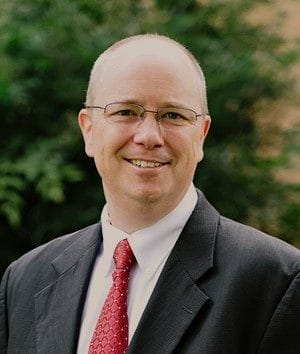
Our lawyers are graduates of the University of Virginia School of Law and have distinguished themselves as lawyers and as members of the community. Our lawyers have been selected for numerous leadership positions in various legal organizations and regularly are called upon to teach legal courses to other lawyers.

High Quality Representation
Our law firm has skilled lawyers who represent clients in Virginia in employment law, divorce and family law, personal injury, and appeals cases. The firm’s lawyers routinely practice in state and federal courts, both at trial, and on appeal to the Court of Appeals of Virginia, the Supreme Court of Virginia, the U.S. Court of Appeals for the Fourth Circuit, and the Supreme Court of the United States. We are proud that our law firm has been named a best law firm by U.S. News and World Report and our lawyers have received many other honors.*

Contact a Charlottesville Lawyer
Call today at (434) 972-9600 or contact us using the form below to schedule a consultation with one of our helpful attorneys. We offer a free initial consultation for personal injury cases and for some types of employment law cases, and we charge a fee for our family law consultations as these consultations are an in-depth one hour or longer meeting that covers a wide variety of issues.
Please note that the use of our contact form does not create an attorney-client relationship and therefore there is no attorney-client protection for the information you choose to submit to us. As such, please do not submit any confidential or privileged information in the contact form.
We are located in Charlottesville, but our lawyers handle cases in Charlottesville, Albemarle County, Greene County, Fluvanna County, Louisa County, Nelson County, Madison County, Orange County, Roanoke, Harrisonburg, Staunton, Waynesboro, Augusta County, and across Virginia.
Davidson & Kitzmann, PLC
413 7th ST NE
Charlottesville, VA 22902
Phone: (434) 972-9600
Fax: (434) 220-0011
© 2023 Davidson & Kitzmann, PLC